
QuickBooks vs Xero: Which Accounting Software Is Better for Your Business?
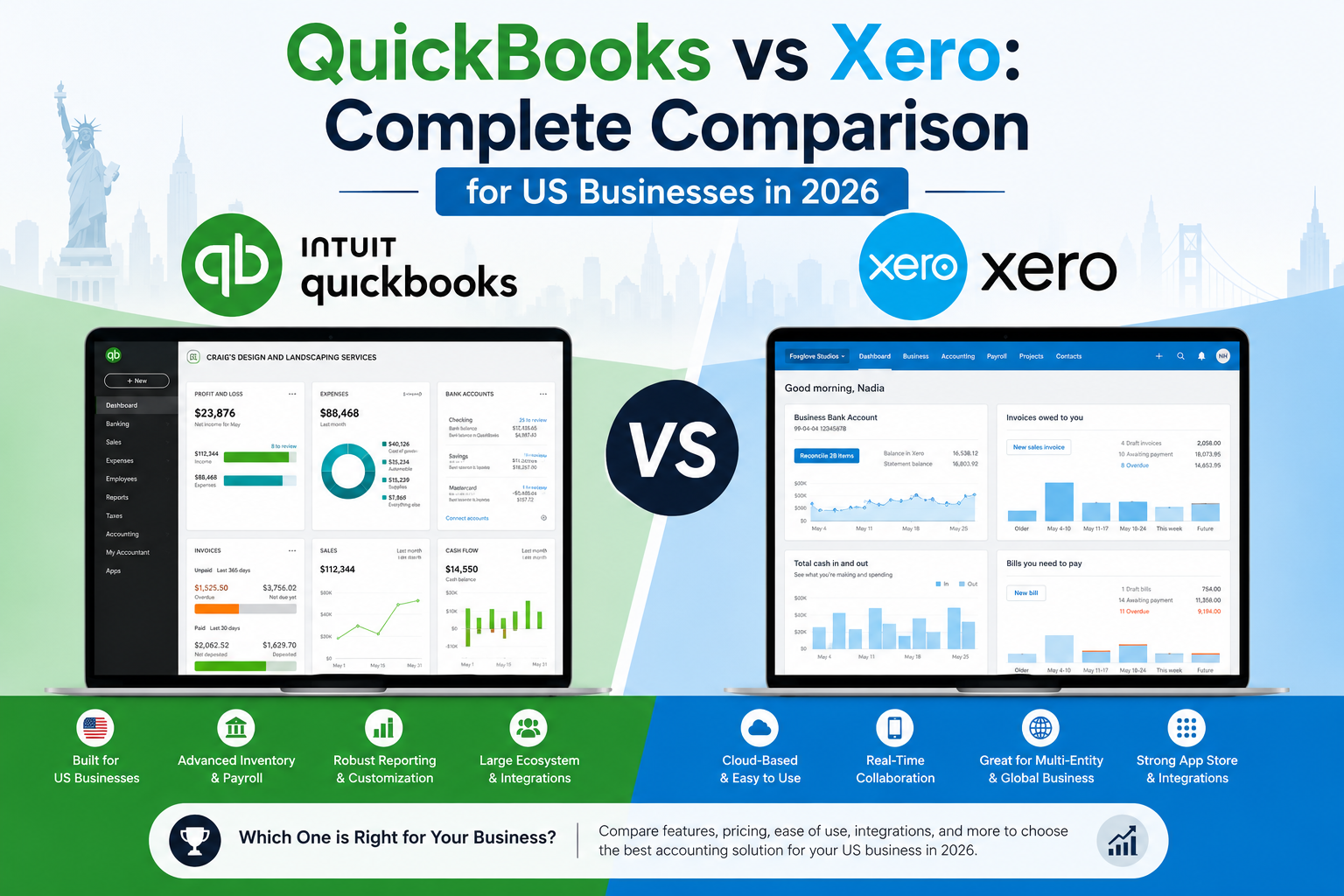
Choosing the right accounting software can significantly impact the efficiency, accuracy, and scalability of your financial operations. Among cloud accounting solutions, QuickBooks and Xero are two of the most widely used platforms by small and mid-sized businesses across the world.
Both platforms offer invoicing, bank reconciliation, expense management, financial reporting, and cloud accessibility. However, they differ in reporting capabilities, integrations, pricing structures, industry suitability, and ease of implementation. As businesses grow, selecting the right platform becomes increasingly important because migrating accounting data later can be time-consuming and costly.
Whether you are a real estate company, HOA management firm, ecommerce seller, manufacturing business, IT services company, or professional services organization, understanding the strengths and limitations of each platform can help you make a more informed decision. This QuickBooks vs Xero comparison covers everything you need to know before choosing a solution for your business.
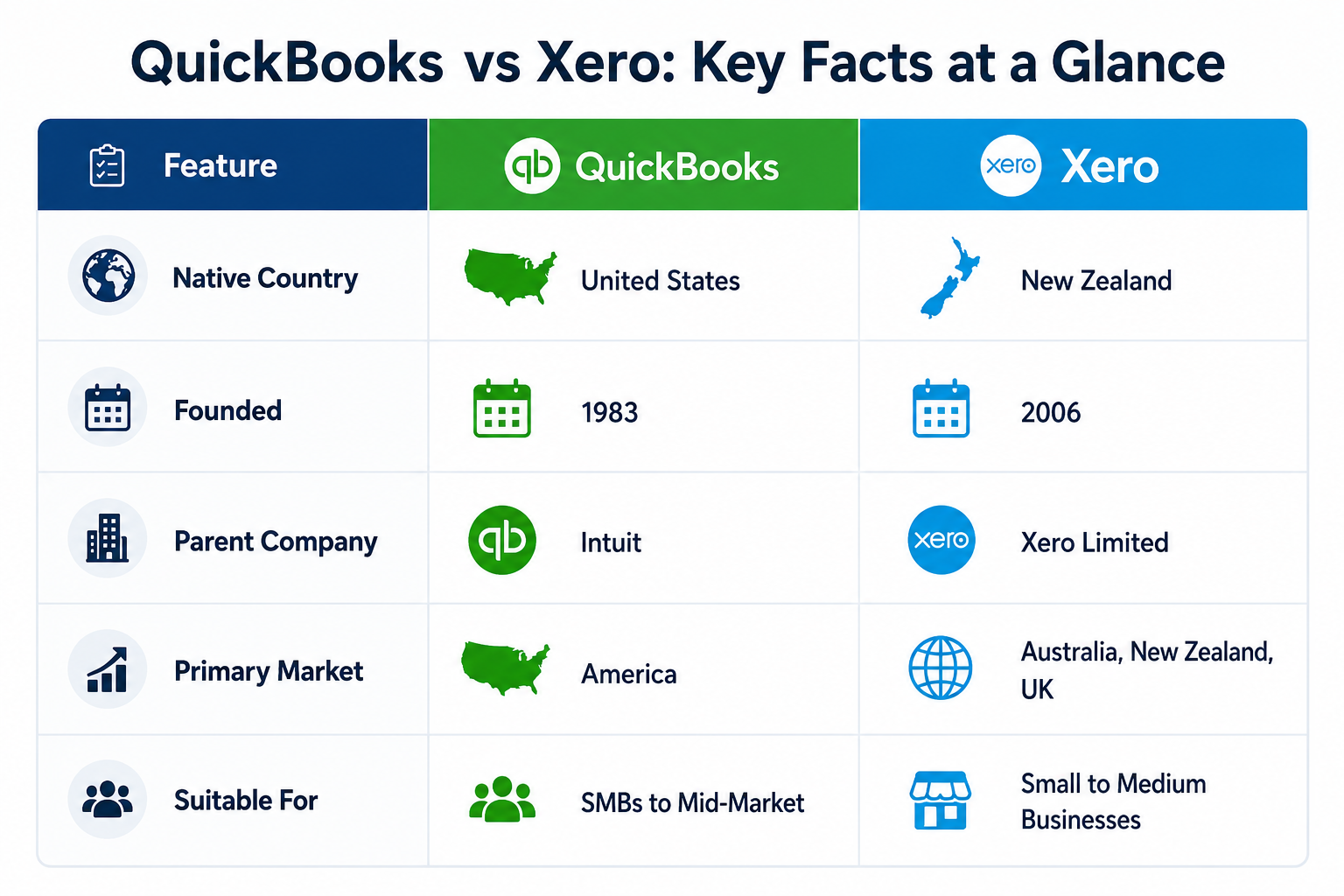
QuickBooks vs Xero: Side-by-Side Comparison
Dashboard Reporting Comparison
One of the most noticeable differences between QuickBooks and Xero is the quality of dashboard reporting.
QuickBooks provides highly detailed dashboards that allow business owners to monitor revenue, expenses, profit trends, cash flow, accounts receivable, and accounts payable in real time. The dashboard is particularly useful for businesses that require deeper financial visibility and management reporting.
Xero offers a visually appealing dashboard that is simple to understand and ideal for small business owners. While it presents key metrics effectively, it does not provide the same level of depth and customization available in QuickBooks.
Winner: QuickBooks
Businesses requiring detailed financial analysis typically prefer QuickBooks.
QuickBooks vs Xero Customized Reports Comparison
Reporting is often the deciding factor when businesses evaluate QuickBooks Online vs Xero.
QuickBooks offers a significantly larger library of standard reports and allows users to customize reports extensively. Users can modify columns, filters, date ranges, customer segments, classes, locations, and other dimensions.
Xero provides essential financial reports but offers fewer customization options. Businesses with straightforward reporting requirements generally find Xero sufficient, while organizations needing advanced management reports often choose QuickBooks.
Winner: QuickBooks
Especially beneficial for growing companies, property managers, HOAs, and businesses requiring board-level reporting.
Do you also wants to compare QuickBooks Vs Zoho, Please check out here.
Integration Comparison
Modern businesses rely on multiple software applications including CRM systems, payment gateways, inventory platforms, ecommerce solutions, and payroll systems.
QuickBooks integrates seamlessly with major business applications such as Salesforce, HubSpot, Shopify, Amazon, Bill.com, Gusto, Stripe, and many others.
Xero also maintains an impressive integration ecosystem and is often praised for its strong connections with ecommerce and international business tools.
For businesses operating multiple software solutions, both platforms perform exceptionally well.
Winner: Tie
QuickBooks leads in North America, while Xero remains highly popular in Australia, New Zealand, and the UK.
QuickBooks Online Vs Xero Pricing Comparison
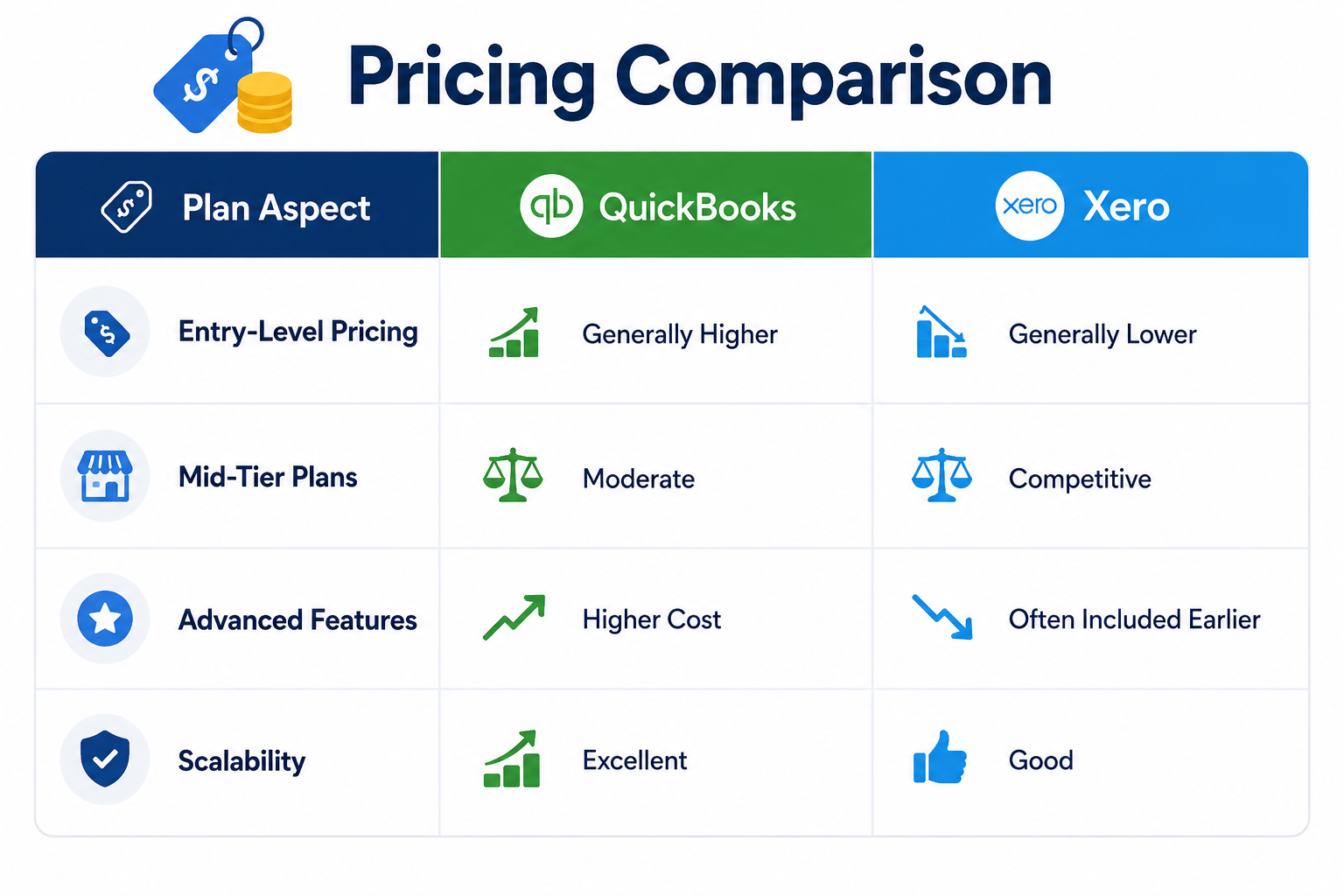
Xero is often considered more affordable for smaller businesses and startups. QuickBooks may cost more, but many businesses find the additional reporting, automation, and accounting features worth the investment.
Winner: Xero for affordability
Winner: QuickBooks for overall value
Checkout the pricing of QuickBooks.
Checkout the pricing of Xero.
Which Accounting Software Is Easier to Set Up?
QuickBooks generally provides a smoother onboarding experience for businesses that are new to accounting software. The platform offers guided setup workflows, extensive documentation, accountant support, and a large ecosystem of certified professionals.
Xero is also user-friendly but may require additional configuration depending on business complexity and reporting requirements.
For businesses migrating from spreadsheets or basic accounting systems, QuickBooks is often easier to implement initially.
Winner: QuickBooks
Industry-Wise Recommendations
Real Estate Companies
Best Choice: QuickBooks
Real estate businesses often require project-level profitability tracking, detailed reporting, and stronger financial controls.
Property Management Companies
Best Choice: QuickBooks
Property managers typically need owner reporting, trust accounting workflows, and customized financial reports.
HOA Management Companies
Best Choice: QuickBooks
HOAs benefit from advanced reporting, budgeting, reserve tracking, and board-ready financial statements.
Ecommerce Businesses
Best Choice: Xero (Small to Medium Sellers)
Xero integrates effectively with many ecommerce applications and provides a streamlined experience.
Complete Guide about US E-commerce Business.
Best Choice: QuickBooks (Larger Sellers)
Growing ecommerce businesses often require deeper reporting and inventory controls.
Manufacturing Companies
Best Choice: QuickBooks
Manufacturing operations generally require stronger inventory management and more advanced reporting capabilities.
IT & Technology Companies
Best Choice: Xero
Technology startups often appreciate Xero's clean interface, automation, and cost efficiency.
Professional Service Firms
Best Choice: QuickBooks
Consulting, legal, accounting, and engineering firms often benefit from stronger reporting and project profitability analysis.
Can Outsourced Accounting Firms Support Both Platforms?
Absolutely.
Modern outsourced bookkeeping and accounting firms routinely work with both QuickBooks accounting software and Xero accounting software. The best outsourcing partner should be software-agnostic and recommend the platform that aligns with your operational requirements rather than forcing a specific solution.
At Unified Books, our team supports businesses using both QuickBooks and Xero. We help clients with software selection, chart of accounts design, implementation, migration, bookkeeping, bank reconciliations, financial reporting, month-end close processes, and ongoing accounting support.
Whether your organization prefers QuickBooks Online or Xero, the goal should always be selecting the accounting software that best supports your business model, reporting requirements, and growth objectives.
Conclusion Xero vs QuickBooks which one is best:
The QuickBooks vs Xero debate does not have a one-size-fits-all answer. Both platforms are excellent cloud accounting software solutions and can significantly improve financial management when implemented correctly.
If your business requires advanced reporting, stronger customization, better inventory management, and deeper financial analysis, QuickBooks is generally the stronger choice.
If affordability, simplicity, ease of collaboration, and international accessibility are your priorities, Xero may be the better fit.
Ultimately, the best accounting software for your business depends on your industry, reporting needs, growth plans, and operational complexity. Working with an experienced accounting partner can help ensure successful implementation and long-term success regardless of which platform you choose.
Written by